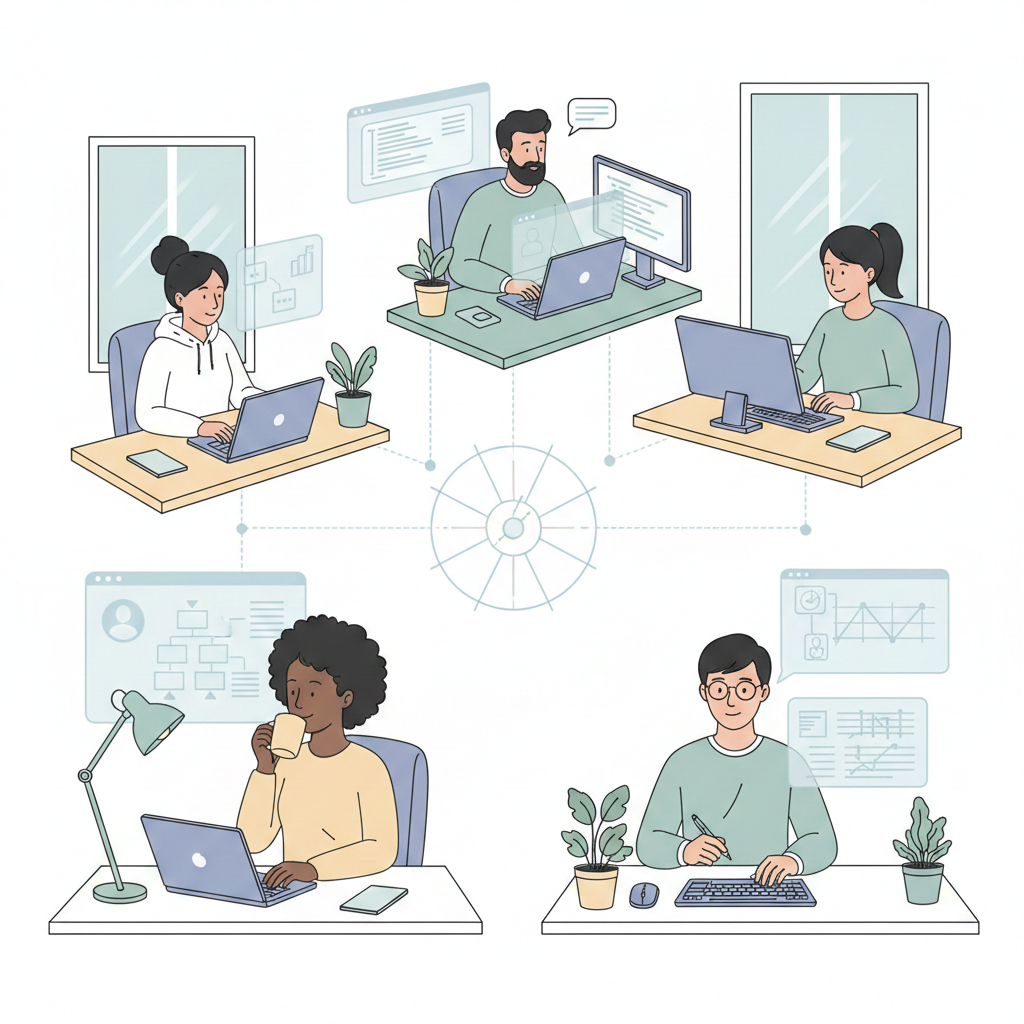
As teams grow and work becomes more distributed, communication multiplies rapidly. Messages arrive throughout the day, notifications appear constantly, and attention gets fragmented across conversations, channels, and tools.
More communication does not always lead to better collaboration. In many cases, it does the opposite. People end up reacting instead of thinking, and focused work becomes harder to protect.
Research shows that constant interruptions reduce focus and increase stress for knowledge workers. When attention is broken repeatedly, productivity suffers, even if people appear busy.
This is where calm communication becomes essential.
What Calm Communication Means
Calm communication is about fewer messages, clearer answers, and intentional interruptions. It means using tools that support work quietly instead of demanding attention at every moment.
A system designed for calm communication answers repeated questions using existing team knowledge, stepping in only when it adds real value. It helps teams communicate with purpose rather than volume.
Why It Matters
The future of productivity is not about louder tools or more messages. It’s about systems that respect attention and protect focus. Teams that adopt calm communication are able to concentrate better, reduce stress, and collaborate more meaningfully.
If your team feels overwhelmed by constant messages and interruptions, embracing calm communication can transform the way you work. Tools that support this philosophy can create a quieter, more productive environment where focused work thrives.